




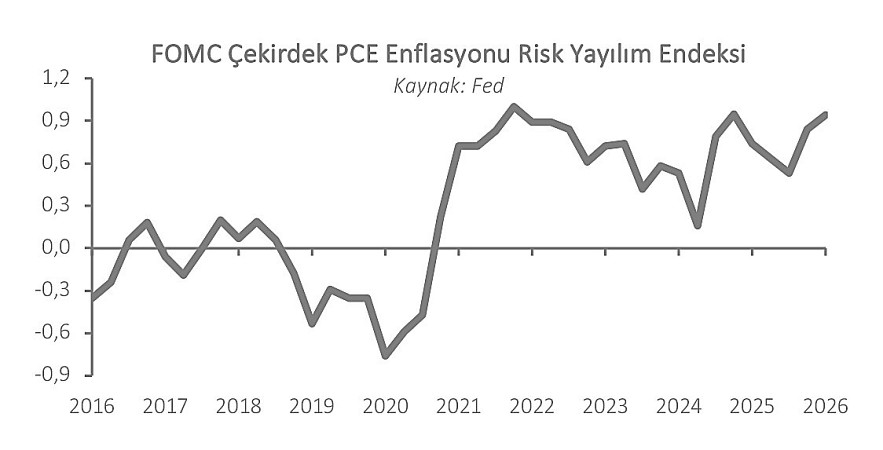


While global leading indicators point to growth maintaining its resilient course, strong momentum in the technology sector offsets the pressure of the war on economic activity. Global growth around 3 percent in 2026 remains the base scenario. While the impacts of the war are felt more pronounced in fragile emerging economies, artificial intelligence is supporting the growth of developed economies. Global disinflation, on the other hand, has stalled. Despite a slight pullback in price increases in the US, inflation and inflation expectations remain significantly above the Fed's 2 percent target. Meanwhile, accelerating price increases in items connected to artificial intelligence raise concerns that strong technology demand could keep inflation high. The simultaneous pressure of energy and food prices, tariffs, and technology demand makes it difficult for central banks to view these effects as temporary, while the possibility of additional tightening is on the agenda. In the Eurozone, while the energy shock dampens growth, persistent inflation keeps the possibility of additional ECB rate hikes alive. In China, despite strong exports, weak domestic demand limits growth, while policy support relies on liquidity and structural tools.
While Fed members assess that artificial intelligence investments may increase price pressures in the short term and provide productivity in the long term, views defending a stricter stance within the Fed are gaining ground. Weaker employment growth and rising layoffs in the US have made the slowdown in the labor market pronounced. Although falling gasoline prices and an improving economic outlook support consumer sentiment, the sentiment remains below last year. Concerns regarding the employment impact of artificial intelligence persist. A policy approach that relies less on forward guidance and is more responsive to data stands out among global central banks. While this change increases policy flexibility, it also brings along the risks of communication uncertainty and delayed response to inflation. In this framework, the Fed's signals regarding its new policy approach will be closely monitored.
GLOBAL FINANCIAL MARKETS: RISK APPETITE RESILIENT DESPITE FED UNCERTAINTY
While US-Iran diplomacy, weakening US employment, and decreasing Fed rate hike pressure support risk appetite in global markets; Fed communication, high borrowing needs, geopolitical risks, and high term premium can keep bond yields and market volatility high. The dollar may trade neutrally in the short term due to weak employment and the likelihood of the Fed remaining on hold; potential rate hikes could provide support in the medium term. Upward risks in inflation and term premium in the US indicate that the 10-year bond yield may maintain its high course despite weakening employment. Although the sustainability of artificial intelligence investments and increasing competition are questioned in US stocks, strong balance sheets and a robust demand outlook support the S&P 500 despite high valuations, geopolitical risks, and potential Fed tightening. In gold, while falling oil prices dragging down inflation and interest rate expectations, the recovery in central bank purchases, and continuing ETF inflows support the outlook, the broad-based distribution of demand points to the continuation of the upward trend. Conversely, the Fed shifting toward a more hawkish stance and 2026 central bank purchases remaining below last year stand out as the main risks that could limit the upward movement.
TURKISH ECONOMY: WEAKENING DOMESTIC DEMAND SUPPORTS DISINFLATION
While the weak outlook in the manufacturing industry continues in the Turkish economy, PMI data shows that the sector has remained in contraction territory for over two years, and weak demand and the decline in new orders continue to suppress production. Growth forecasts for 2026 are around 3 percent, parallel to the global outlook. While the loss of momentum in the services sector, tight credit conditions, and the slowdown in domestic demand support disinflation, improvement in core indicators and annual inflation continues. However, stickiness in services inflation, energy costs, and the gradual removal of the tax buffer on fuel keep upward risks alive, with year-end inflation expectations around 30 percent. While persistence in price pressures and geopolitical risks support the CBRT's cautious stance, disinflation progressing slower than expected indicates that interest rates may remain high for a longer period. Conversely, a decrease in geopolitical tension and a decline in energy prices could create a limited room for easing starting from autumn.
While the slowdown in core imports in leading foreign trade data also points to the slowdown in domestic demand, the rise in energy prices poses a risk to the external balance. The ratio of the current account deficit to GDP has risen above 2 percent and is expected to reach approximately 3 percent by year-end if oil prices remain at current levels; this ratio is below the 20-year average of 3.6 percent. The recovery in reserves and the real return advantage of the TL support foreign investor demand, providing a buffer for the exchange rate and external financing outlook. The budget deficit to GDP ratio declined from 2.9 percent to below 2.5 percent in 2025 with the contribution of revenue growth and the drop in non-interest expenditures, while fiscal discipline remains consistent with the Medium-Term Program (MTP) targets.
DOMESTIC FINANCIAL MARKETS: RATE CUT EXPECTATIONS SUPPORT TL ASSETS
The recovery in reserves, foreign capital inflows, and households not turning to foreign currency support the TL. The course of disinflation, oil prices, the current account balance, and the CBRT's rate cut path will determine the pace of depreciation in the TL. While it is important for the CBRT to observe disinflation and the external balance together, cautious rate cuts, a positive real interest rate, and permanent disinflation will be decisive for exchange rate stability.
The decline in inflation and oil prices creates room for the CBRT to cut interest rates towards the end of the year, which could support foreign interest in TL bonds. If disinflation and foreign inflows continue, a gradual decrease in bond yields is expected, and the supportive effect of rate cuts on medium-term bonds could be more pronounced. Deterioration in the outlook for inflation, exchange rates, or fiscal policy may limit this trend. While the tight policy stance, the recovery in reserves, and the decreasing external financing need support the decline in the risk premium, attractive return levels increase interest in Eurobonds. The outlook for domestic stocks is cautiously positive. While disinflation, rate cut expectations, attractive valuations, and low foreign positioning support the index; oil prices, resilient inflation, and political uncertainty are the main risks. Positive progress regarding market operations in the November MSCI review could increase foreign interest.
Legal Disclaimer Note: The evaluations and opinions included in this article are of a general nature and do not fall within the scope of investment consultancy.
This content has been translated using artificial intelligence technology.