





İKMİB President Adil Pelister stated that the chemical sector, which directly contributes to many sectors and stands out with its strategic importance, plays a significant role in the global economy with its wide scope and high added value. Emphasizing that they are Turkey's second largest exporting sector and that the plastics sector has made significant contributions to this success, Pelister said, "In terms of raw material supply for the plastics sector, Turkey needs at least five petrochemical facilities."
Adil Pelister, Chairman of the Istanbul Chemicals and Chemical Products Exporters' Association (İKMİB), stating that the chemical sector will be the most important driving force in Turkey's development, announced that they aim for 50 billion dollars in exports by 2030. Pelister, expressing their desire to build a sustainable future in a technology-compatible society, said, "The chemical sector plays a strategic role in the Turkish economy, providing significant contributions with high added value and extensive production capacity."
Pelister noted that the chemical sector achieved 23.1 billion dollars in exports in the first nine months of 2024, growing by 4.2 percent for this period, and pointed out that the largest item in exports came from the plastics sector. Pelister reported that approximately 3.09 million tons of plastic were exported as of the first three quarters of 2024, stating, "Approximately 1.74 million tons of this export in the first three quarters of 2024 came from plastic products, while the remaining 1.35 million tons came from the plastic raw material sector. With 7.05 billion dollars in exports, the sector is the sub-sector with the highest exports within the chemical sector, which is Turkey's second-largest exporting sector," he added.
Pelister noted that the Turkish chemical sector is 70 percent dependent on foreign sources for raw materials, stating that this rate can reach 90 percent in plastics and their products. Pelister emphasized that at least five petrochemical facilities need to be established in Turkey for the raw material supply of the plastics sector, saying, "The establishment of these facilities will make a very significant contribution to the production of chemical derivatives of petrochemicals, as well as being important for plastic raw materials." We spoke with İKMİB President Adil Pelister about the chemical sector and the share of plastics within the sector.
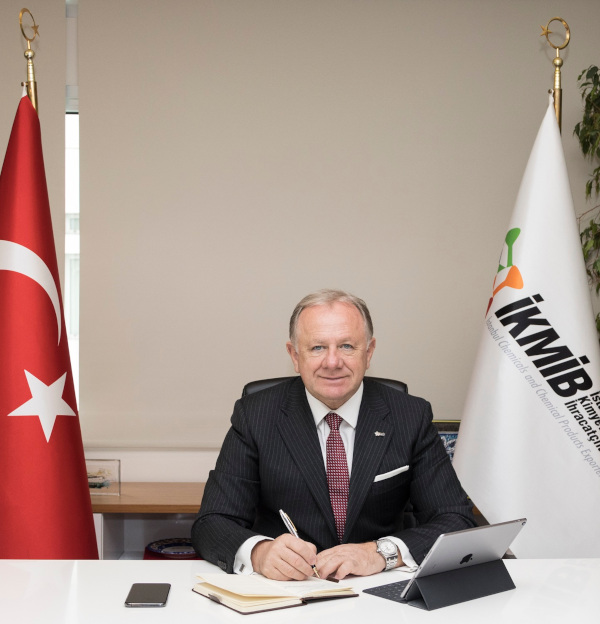
We would like to hear from you about the chemical sector, which steers the Turkish economy. Could you briefly introduce the sector and discuss its scope?
The chemical sector stands out as a broad and strategic industrial field where raw materials are transformed through chemical processes to obtain new products. Our sector, whose impact is felt in almost every area of life, serves a wide range of industries from agriculture to food, pharmaceuticals to textiles, automotive to energy. Materials produced in the chemical sector form the basis of many products we use in our daily lives.
In petrochemicals, an important sub-branch of the chemical sector, substances such as plastics, synthetic rubber, solvents, and detergents are produced by processing fossil fuels like petroleum and natural gas. In addition, the chemical sector plays a major role in the production of basic chemicals. Organic and inorganic substances such as acids, bases, salts, and fertilizers, which are critically important for agriculture and industry, constitute basic chemicals.
The pharmaceutical and biotechnology fields are also an important part of the chemical sector. The development and production of pharmaceuticals directly contribute to advancements in life sciences. Furthermore, specialized chemicals produced for specific industrial processes, and products used in more niche areas such as paints, adhesives, and catalysts, hold a significant place in the chemical sector.
Agricultural chemicals are another key area in the sector. Pesticides, herbicides, fungicides, and fertilizers are widely used to increase agricultural productivity. Additionally, the consumer products category includes chemicals that directly reach consumers, such as cleaning supplies, detergents, and cosmetics.
The chemical sector is at the heart of innovation and sustainability for the development of both basic and advanced technology products. The chemical sector, which has strategic importance by directly contributing to many sectors, plays a significant role in the global economy with its wide scope and high added value.
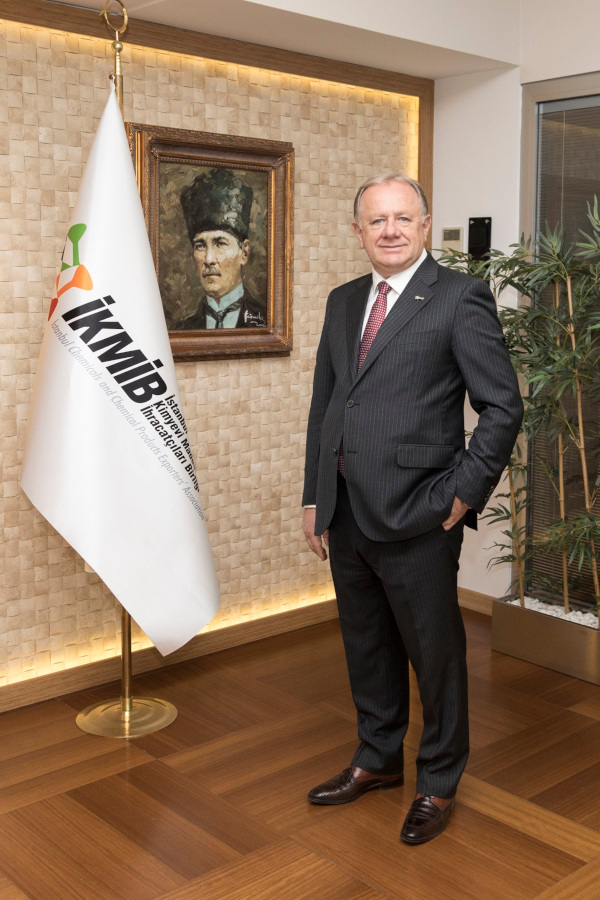
Could you evaluate the first nine months of 2024 for the chemical sector and tell us about your year-end targets?
According to the data for the first nine months of this year, our chemical sector exports reached 23.1 billion dollars. A growth of 4.2 percent was achieved during this period. Despite challenging conditions such as a decline in global demand, wars in our immediate geography, inflation and exchange rate balance, and an increase in input costs, our sector managed to maintain its position as Turkey's second-largest exporting sector.
The top 10 countries we exported to most in the January-September period were the Netherlands, Romania, USA, Russia, Italy, Spain, Germany, Iraq, UK, and Egypt. Also in this period, the top 10 product groups we exported most were plastics and their products, mineral fuels, mineral oils and products, inorganic chemicals, essential oils, cosmetics and soap, rubber, rubber articles, paints, varnishes, inks and preparations, pharmaceutical products, miscellaneous chemical substances, washing preparations, and organic chemicals.
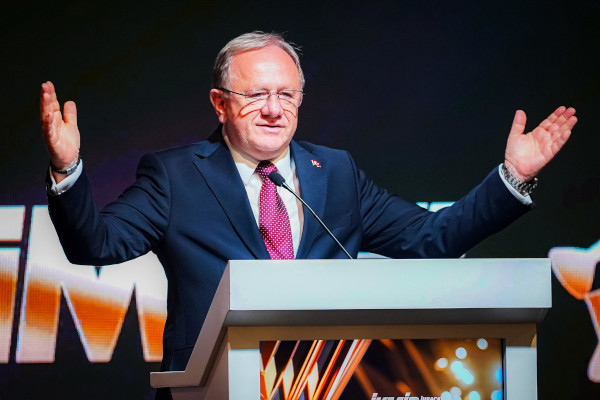
Does the sector have a target for its future projection?
We believe that the chemical sector will be the most important driving force in our country's development. In this context, our vision is 2030. In defining our vision, we based it on compliance with the norms and standards set forth for sustainability. For this purpose, we created our Chemical Sector Sustainability Action Plan report, which we announced to the public last year. Furthermore, we are preparing to organize a large chemical council in 2025 with national and international participation to collectively shape our 2030 Chemical Industry Strategy.
Our 2030 goal is to achieve sectoral growth, exceed 50 billion dollars in exports, and build "a sustainable future in a technology-compatible society." Especially, opening up to new markets and adapting to the green economy will form the basis of our future growth. As İKMİB, we aim to advance the sector further with these goals and strengthen Turkey's position in the global market.
Furthermore, in line with our 2050 vision, we believe and are convinced that the establishment of a 'Turkey Chemistry Agency' and, through this agency, a 'Chemistry Science and Technology City' comprising a Chemistry Science and Technical University, research institutes, sectoral technology initiatives, and highly qualified employees, is essential.
Could you elaborate on the economic value generated by the chemical sector within the Turkish economy?
The chemical sector plays a strategic role in the Turkish economy, providing significant contributions with high added value and extensive production capacity. By supplying raw materials, semi-finished goods, or finished products to many sectors such as agriculture, automotive, construction, textile, and pharmaceuticals, it supports the growth of industrial production.
The sector also holds a significant share in exports, being one of Turkey's largest exporting sectors with an annual volume of approximately 30 billion dollars. Thanks to its proximity to Europe, the Middle East, and North Africa, Turkey is positioned as a strategic supply center for chemical products.
Furthermore, the chemical sector focuses on sustainability and environmentally friendly technologies through its investments in R&D and innovation. This situation increases its long-term growth potential. Our sector plays a critical role in Turkey's economic growth through its contributions to employment, exports, and technological developments.
Could you compare the chemical sector in Turkey with other countries worldwide?
The Turkish chemical sector, having recorded significant growth in recent years, has reached a prominent position in the global market. Our share of global chemical exports was 0.68 percent in 2023. There was an increase of 0.09 percent compared to 2022. Our sector plays a critical role in Turkey's industrial and export structure with its wide product range and strong export potential. Our sector holds a 14 percent share in Turkey's total exports, according to 2024 data. This rate in chemicals, which was Turkey's second-largest sector in exports in 2023, shows a consistent increase almost every year.
The European Union, the Middle East, North Africa, and the USA constitute the main export markets for Turkish chemical products. This broad geographical market network transforms Turkey into a regional chemical production base.
With which countries do we have the most cooperation? Can we mention a standout country that makes a difference?
Turkey has an extensive cooperation network in the chemical sector, maintaining significant trade relations especially with European Union (EU) countries, the Middle East, North Africa, the USA, and the Asia-Pacific regions. Trade with these countries is of great importance for raw material supply and the export of chemical products. Among Turkey's main trade partners in the chemical sector, Germany, Italy, France, the USA, and China stand out.
Germany, as one of Turkey's largest trade partners, supplies chemical raw materials and advanced technology products, while Turkey exports petrochemical and plastic products. Italy and France are important markets for Turkey in terms of chemicals for the automotive and construction sectors. The USA has strong commercial ties, especially in the field of specialty chemicals and pharmaceutical raw materials, while China plays a critical role in raw material supply.
On the other hand, the Netherlands is a country that develops remarkable collaborations with Turkey in the chemical sector. Its leadership in sustainability and green chemistry solutions offers significant contributions to Turkey in the areas of circular economy and environmentally friendly production technologies. We can say that this cooperation strengthens Turkey's competitive power by supporting its R&D and sustainability goals, creating a distinctive partnership in the sector.
What is the place of the plastics sector within chemistry? What would you like to say about the plastics sector?
In the Turkish plastics sector, a total of 7.05 billion dollars in exports of plastic raw materials and products was realized as of the first three quarters of 2024, marking a 2.58 percent increase compared to the same period of the previous year. With 7.05 billion dollars in exports during the period, the plastics sector holds the position of the sub-sector with the highest exports within the chemical sector, which is Turkey's second-largest exporting sector. Of the 7.05 billion dollars in exports made in the first three quarters of 2024, 5.01 billion dollars came from plastic products, and 2.04 billion dollars from the plastic raw material sector.
In terms of value, 29 percent of our exports in the relevant period came from raw material exports, while 71 percent came from plastic products. Plastic packaging products ranked first in plastic product exports with 2.78 billion dollars.
While our plastics sector exports increased by 2.58 percent in value compared to the same period of the previous year, during the relevant period, product exports of the sector saw a 1.71 percent increase and raw material exports saw a 4.75 percent increase compared to last year.
Among the countries with the highest exports, where does Turkey rank?
In the plastics sector in 2023, the countries with the highest exports were China, the USA, Germany, Korea, Belgium, and the Netherlands, respectively. Turkey ranks 19th in this list. Turkey's top three export destinations in 2023 were Germany (600 million dollars), Russia (530 million dollars), and the United Kingdom (510 million dollars). In the first three quarters of 2024, the top 3 countries it exported to most were Germany (454 million dollars), the United Kingdom (406 million dollars), and Italy (383 million dollars).
The Turkish chemical sector is 70 percent dependent on foreign sources for raw materials. This rate can reach 90 percent in plastics and their products. I would also like to state that the establishment of at least five petrochemical facilities in Turkey is necessary and very important for the raw material supply of the plastics sector. The establishment of these facilities will make a very significant contribution to the production of chemical derivatives of petrochemicals, as well as being important for plastic raw materials.
Could you briefly evaluate the plastics sector, considered the backbone of the Turkish economy? Could you talk about the value the sector adds to the Turkish economy?
The plastics sector, one of the fastest-growing sectors in Turkey, generally constitutes the largest item in our chemical sector exports. Plastics sector exports, totaling raw materials and manufactured products, amounted to approximately 3.09 million tons as of the first three quarters of 2024. Approximately 1.74 million tons of these exports in the first three quarters of 2024 were plastic products, while the remaining 1.35 million tons were from the plastic raw material sector. In terms of quantity, 44 percent of our exports in the relevant period came from raw material exports, while 56 percent came from plastic products. Plastic packaging products ranked first in plastic product exports with 989 thousand tons.
While our plastics sector exports increased by 7.24 percent in quantity compared to the same period of the previous year, during the relevant period, product exports of the sector saw a 5.26 percent increase and raw material exports saw a 9.9 percent increase compared to last year.
"We will organize the Chemistry Council"
“We believe that the chemical sector will be the most important driving force in our country’s development. In this context, our vision is 2030. In defining our vision, we based it on compliance with the norms and standards set forth for sustainability. For this purpose, we created our Chemical Sector Sustainability Action Plan report, which we announced to the public last year. Furthermore, we are preparing to organize a large chemical council in 2025 with national and international participation to collectively shape our 2030 Chemical Industry Strategy.”
This content has been translated using artificial intelligence technology.
```