




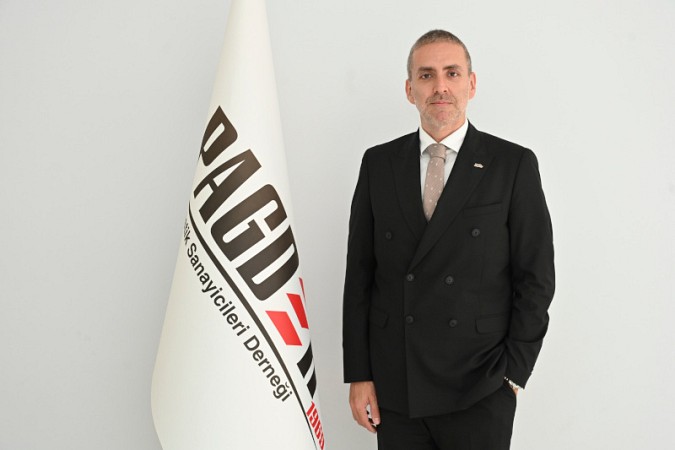
Kenan BENLİLER
Plastics Industrialists' Association (PAGDER)
Chairman of the Board
While 2024 passed under challenging economic conditions for our country, our sector was also deeply affected by these difficulties. Economic measures implemented to reduce high inflation led to a contraction in domestic demand. On the other hand, weak demand in Europe, our main export market, caused the decline in domestic demand not to be compensated through exports.
We are leaving behind a year in which economic activity slowed down and challenging market conditions prevailed as a result of developments in our region. Our greatest wish is that the wars and conflicts continuing in our immediate geography, which have caused numerous casualties, end as soon as possible and that our region finds peace.
While 2024 passed under challenging economic conditions for our country, our sector was also deeply affected by these difficulties. The tightening of financial conditions by economic and fiscal policies implemented to reduce rapidly rising inflation in recent years also brought about a contraction in domestic demand. On the other hand, during this period, the weak demand in Europe, our main export market, prevented the decline in domestic demand from being compensated through exports.
The Eurozone manufacturing Purchasing Managers' Index (PMI) remained below the threshold value of 50 throughout 2024, indicating a contraction in production. Furthermore, it is worth noting that this contraction deepened further in the last quarter. In this context, we can say that one of the main determinants of our sector's performance in the upcoming period will be its ability to compensate for this European-driven demand contraction with alternative markets. Despite these negative developments in our export markets, it is worth noting that our exports increased by 2.6 percent in the remainder of the year. Although this growth rate remains below both our country's total export growth and manufacturing industry export growth, it presents a very positive picture considering the current conditions.
Production losses must be compensated
Unfortunately, we observe that this success achieved by our sector in exports was not enough to compensate for the production losses caused by the contraction in domestic demand. Due to the base effect of the production slowdown caused by the devastating earthquake in February 2023, which resulted in the loss of many lives of our citizens, the industrial production index increased in the first quarter of 2024. However, we observe that industrial production declined in both the second and third quarters of the year. At this point, the alarming development for our sector is that the decrease in production was much sharper than both total industrial production and manufacturing industrial production, and the sector negatively diverged in this regard. Yet, for many years, our plastics sector has been growing faster than our manufacturing industry thanks to its dynamic structure. For this reason, developments that will enable us to compensate for these production losses in the upcoming period will be of critical importance.
Financing costs must be reduced
Undoubtedly, global developments will be as decisive as domestic developments in our sector's performance in 2025. On the other hand, facilitating access to finance and reducing financing costs are essential for us to maintain our competitive power. Due to the financing bottleneck experienced in recent years, Industry 4.0 investments in our country have been postponed. Meanwhile, these investments are accelerating globally. While the number of robots per 10,000 employees in the manufacturing industry is 415 in Germany, 219 in Italy, 180 in France, and 151 on the world average, this number is only 43 in Turkey. If we cannot implement these investments quickly, it is quite likely that we will largely lose our competitive power in the medium to long term. For this reason, it would be appropriate to determine investment priorities in a way that does not harm the inflation fighting program and allocate resources to these areas.
As PAGDER, just like in previous years, this year we organized individual and national participations in the leading fairs of our sector worldwide and contributed to our sector members having a smooth exhibition experience. In addition, our travel programs, which have now become a brand, were the most popular programs among our sector members, and thanks to this, we had the pride of organizing the largest delegations from our country. We will continue to work to further advance our travel programs in 2025, when the K fair and Chinaplas fair will take place. Now, Plast Eurasia, the most important fair of our country and region, is opening its doors. Wishing all our sector members who will participate in the fair a successful exhibition.
This content has been translated using artificial intelligence technology.