




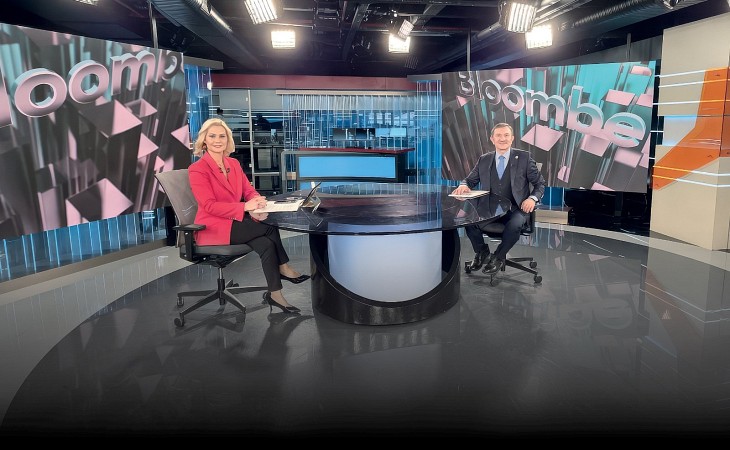
Europe's “Made in Europe” criteria necessitate a comprehensive transformation, from production to energy use. For Turkey, this process, while offering new export opportunities, also brings the risk of increased costs if compliance is not met. Ömer Karadeniz, President of the Plastics Industrialists Federation (PLASFED), evaluated the potential effects of these criteria on Turkish industry for Hande Berktan.
Speaking on the "Günden Teknoloji" program broadcast on Bloomberg HT, Ömer Karadeniz, Chairman of the Plastics Industrialists Federation (PLASFED), assessed the impact of the European Union’s “Made in Europe” criteria on the Turkish manufacturing industry. Answering questions from the program's presenter Hande Berktan, Karadeniz stated that the new era would fundamentally change production, environmental, and trade policies.
Karadeniz emphasized that the criteria planned by the European Union with the aim of strengthening domestic production and increasing supply security are not merely a labeling system, but encompass a broad transformation from production standards to carbon footprint.
“There is also a great opportunity for Turkey”
Emphasizing that Turkey is one of Europe's most important production and supply centers, Karadeniz reminded that Turkey ranks second in the plastics sector in Europe, making the following assessment:
“Europe wants to reduce its dependence on China. This is a very significant opportunity for Turkey. Thanks to our logistical advantage, production quality, and industrial infrastructure, we can become one of Europe’s main suppliers.”
According to Karadeniz, considering that over 40% of Turkey's exports go to Europe, compliance with the new criteria can provide an opportunity to both expand market share and achieve a stronger position in the supply chain.
“If compliance is not achieved, additional taxes are inevitable”
However, Karadeniz pointed out that the process also carries serious risks, stating that Europe will impose additional costs on countries that do not meet the conditions for low-carbon production, clean energy use, and recycled raw materials.
Karadeniz noted that the use of recycled materials might become mandatory, especially in packaging and production processes in the new era, emphasizing that industrialists must quickly adapt to this transformation.
“Energy transformation and recycling are essential”
Karadeniz stated that in the new trade order, it has become mandatory for industry to shift towards clean energy, adding that the widespread adoption of renewable sources like solar energy would be critical.
Karadeniz said that Turkey should accelerate this transformation through public policies, incentive mechanisms, and industrial investments, adding, “If we adapt to this process, we will win; if we don’t, we will pay the cost.”
In the program, Karadeniz added that the Made in Europe criteria mean both a growth opportunity and competitive pressure for the Turkish manufacturing industry simultaneously, making a rapid transformation of the industry inevitable, centered on environment, energy, and recycling.
This content has been translated using artificial intelligence technology.