




PLASFED President Ömer Karadeniz emphasized that despite the limited recovery in PMI in industry, access to finance issues, high energy costs, and exchange rate imbalance suppressed production. Karadeniz, stating that industrialists are struggling due to increasing costs and that supportive steps should be taken in the areas of production, energy, and exports, said, "Turkey's true wealth is industry; production needs to be strengthened sustainably."
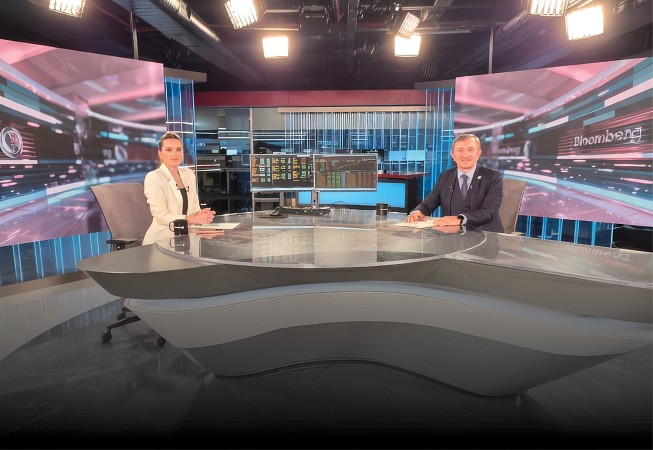
Ömer Karadeniz, Chairman of the Board of the Plastics Industrialists Federation (PLASFED), was a guest of Alara Akgün on the "Business World" program broadcast live on Bloomberg HT. Karadeniz made important evaluations on many topics, from the latest data on industrial production to access to finance issues, energy costs, and obstacles to exports.
Referring to the Manufacturing PMI data announced by the Istanbul Chamber of Industry during the program, Karadeniz stated that the index had been below the threshold value of 50 for a long time, but its rise to 48.9 in December was encouraging for industrialists. Karadeniz emphasized that this limited recovery in PMI gave hope to the sector, but despite this, there has been significant pressure on the production side for approximately two years.
Emphasizing that Turkey is a production country, Karadeniz stated that industry is the cornerstone of the country's economy, saying, "For a country without oil, production is more valuable than oil. Our greatest wealth is our industry. Sustainable economic growth is not possible without supporting production."
“High costs are a big problem”
Karadeniz, stating that the biggest problem for industrialists is access to finance and high costs, reported that they brought this issue to the attention of all authorities during their visits to Ankara as PLASFED. Karadeniz said that during the meetings, the difficulties industrialists face in accessing credit were clearly laid out.
Karadeniz also drew attention to the pressure of energy costs on industry, stating that supportive policies must be developed for energy prices to enable industrialists to maintain their competitive power. Reminding that industry in developed countries accesses energy at more affordable costs, Karadeniz said that in Turkey, high costs put pressure on production.
Karadeniz also touched upon the exchange rate-cost imbalance experienced on the export side, emphasizing that while domestic costs are rapidly increasing, foreign exchange rates are not rising at the same rate, which puts exporters in a difficult position. Karadeniz stated that Turkey has a strong production and export infrastructure and warned that if this balance cannot be maintained, the competitive advantage will weaken.
“Obstacles to exports must be removed”
Karadeniz, also making evaluations regarding the Customs Union process, pointed out that the current structure with the European Union is evolving towards a point that could lead to results detrimental to industrialists, and stated that new regulations are needed in this area to protect Turkey's interests.
Summarizing the expectations of industrialists at the end of the program, Karadeniz stated that facilitating access to finance, reducing energy costs, and removing structural obstacles to exports would revive production appetite.
This content has been translated using artificial intelligence technology.