



At the seminar hosted by the Istanbul Chamber of Industry (İSO), the effects of the European Union's "Made in Europe" approach on Turkish industry were discussed. PLASFED President Ömer Karadeniz stated that the new criteria bring a new competitive standard that redefines all stages of production, from sustainability to traceability.
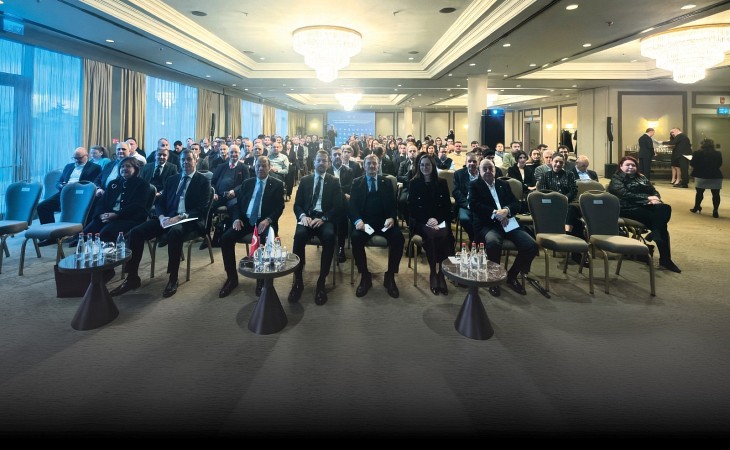
The "Made in Europe" approach, which aims to reshape the competitiveness of European industry, was discussed in Istanbul at a seminar hosted by İSO. At the event held on February 17, 2026, at the InterContinental Istanbul Hotel, the possible effects of the European Union's new industrial policies on Turkey were comprehensively evaluated.
At the program organized within the scope of the European Enterprise Network, new policy tools developed by the European Union and the European Commission were discussed, in line with the goal of reducing fragilities in global supply chains and strategic dependencies. It was emphasized that prioritizing the "Made in Europe" criterion in public procurement and financial supports could create significant changes in production and supply chain structures.
Policy, sector, and implementation dimensions were discussed in the panel
Following the opening speech by İSO Board Member Celal Kaya, a panel titled "Made in Europe Criteria: Key Elements of Competitive European Industry and its Possible Implications for Turkey" was held. The panel was moderated by BloombergHT TV Program Presenter Hande Berktan.
Associate Professor Dr. Çiğdem Nas, Secretary General of the Economic Development Foundation (İKV), Sinan Ülgen, Managing Partner of Istanbul Economics Consultancy and Director of the Centre for Economics and Foreign Policy Studies (EDAM), Yakup Birinci, Chairman of the Board of the Association of Automotive Parts and Components Manufacturers (TAYSAD), and Elif Berrak Taşyürek, Head of EU Single Market and Green Deal Department at the Ministry of Trade's General Directorate of International Agreements, participated as speakers. Throughout the panel, it was emphasized that compliance criteria related to traceability, domestic added value, sustainable production, and public supports will become increasingly decisive.
Ömer Karadeniz: “This transformation changes the definition of production”
PLASFED President Ömer Karadeniz also attended the meeting, representing the plastics industry. Karadeniz stated in his post-event assessment that the transformation in Europe represents not only a commercial but also a structural change, and said:
“Made in Europe criteria bring a new competitive standard that redefines all stages of production, from sustainability to traceability. If Turkey adapts quickly to this transformation, it can further strengthen its advantage of being a close, reliable, and high value-added production center for Europe.”
This content has been translated using artificial intelligence technology.